
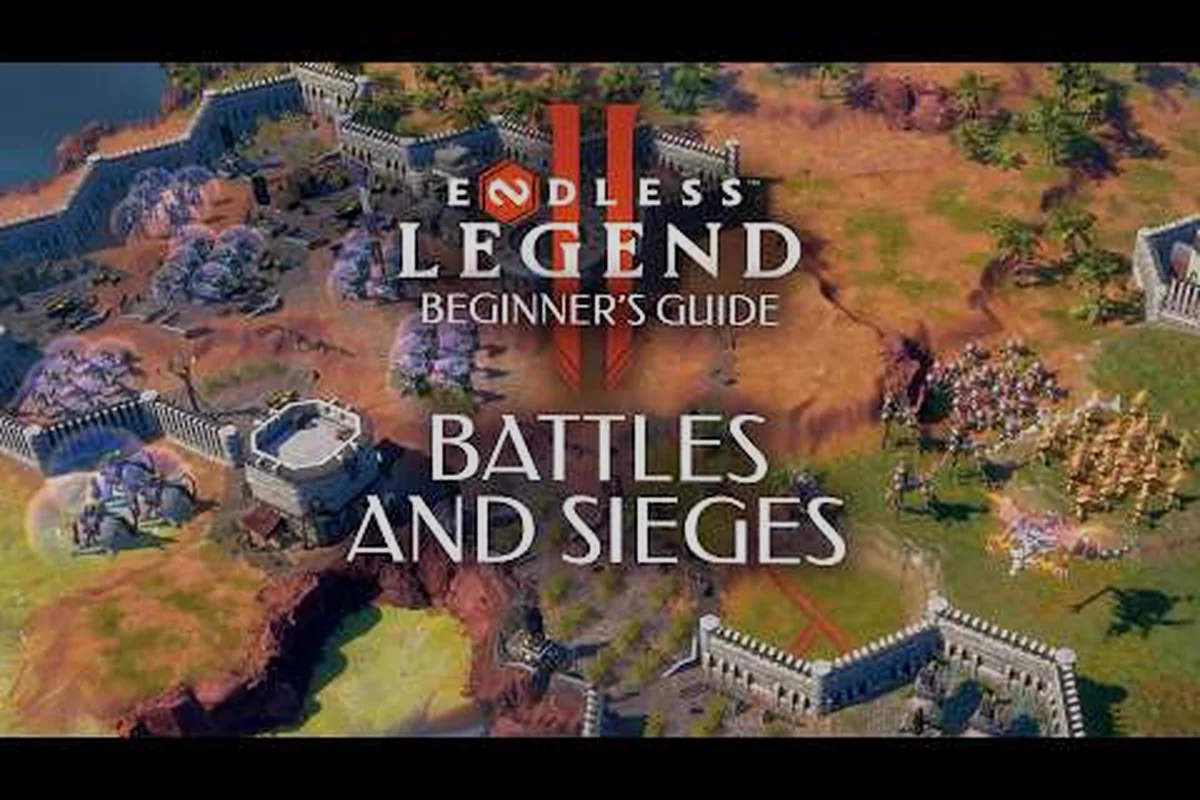
The 1.0 launch of ENDLESS Legend 2 pulled the curtain back on a tactical battle system that rewards careful planning over brute stacking, and understanding how fights resolve decides whether your empire thrives or collapses under the Tidefall. This ENDLESS Legend 2 combat guide walks you through the core loop, positioning rules, hero abilities, and the auto-resolve vs manual-fight tradeoff so you stop losing armies you can't afford. You will learn the exact stat interactions, terrain bonuses, affinity modifiers, and synergy picks that separate a competent commander from one who watches the End turn to ash.
Core Rules of the Tactical Battle Layer
The combat layer in ENDLESS Legend 2 is a hex-grid, side-based tactical affair where two armies clash on a dedicated battlefield, and every stat on the army panel translates into actions you can take per round. According to the official ENDLESS Legend 2 Steam page, 1.0 launched on September 17, 2026 with a wave of battle tuning from lead systems designer Pierre Soriot, the developer who owns Tactical Battles internally at Amplitude Studios.
Core Battle Stats and What They Mean
Every unit in your army carries a stat block that determines what happens when the Initiative bar fills and combat begins. The table below summarizes the eight core combat stats and how they influence a single fight.
| Stat | Effect | Range (Early Game) | Range (Mid Game) |
|---|---|---|---|
| Health | Total damage a unit can absorb before dying | 30–50 | 90–160 |
| Attack | Base damage dealt per strike | 8–14 | 18–30 |
| Defense | Damage reduction from incoming attacks | 2–6 | 8–14 |
| Initiative | Position in the turn order; higher acts first | 10–18 | 22–40 |
| Movement | Hexes a unit can cross per turn | 3–5 | 4–6 |
| Range | Number of hexes a ranged attack can reach | 2–3 | 3–5 |
| Armor | Flat damage reduction applied after Defense | 0–3 | 4–10 |
| Dust Affinity | Bonus damage when fighting on Dust-rich tiles | +5% | +15% |
These numbers do not float in isolation; they are modified by the Battle Affinity system tied to your faction, the terrain you stand on, and the hero leading the army. A unit with mediocre base Attack but a high Dust Affinity can outperform a stronger paper-stat unit on the right tile.
Turn Order and Action Economy
Combat in ENDLESS Legend 2 runs on a deterministic initiative ladder, not on a true simultaneous resolution. Each round, units act in order from highest Initiative to lowest, and each unit gets one action: move, attack, or use a hero ability. You can split movement and an attack by spending a small "after-action" tick that only heroes and a few elite units possess, which makes hero-led armies dramatically more flexible than heroless stacks. The Chain Attack mechanic activates when a friendly unit is adjacent to the target, granting a free follow-up strike that scales with the number of adjacent allies, so bunching your army is a real strategic choice and not just a visual preference.
The Tidefall mechanic bleeds into combat in a few subtle ways. Doomwraiths are corrupted entities that settle in territories and apply city penalties rather than acting as direct military threats, so most of your early combat encounters will be against rival factions, minor factions, and roaming neutral armies rather than the Lost themselves. Knowing which enemy is which matters because neutral armies do not declare war and can be safely bypassed, while rival faction stacks can chain into city sieges if you let them stack up on your border.
Tactical Positioning and Terrain
Positioning is the single biggest lever you have in ENDLESS Legend 2 tactical battles, and the map designers built the hex tiles to reward thoughtful placement. A unit standing on a Forest tile gains a Defense bonus, while a unit on a Hill adds +1 Range to ranged attacks and a minor flanking penalty for enemies trying to close distance. The terrain bonuses are not cosmetic; they are a large fraction of why a "weaker" army can defeat a numerically superior opponent on favorable ground.
Terrain Bonuses Cheat Sheet
| Terrain | Defense Bonus | Movement Cost | Special Effect |
|---|---|---|---|
| Plains | 0 | 1 | No modifier |
| Forest | +3 | 2 | Stealth on first turn |
| Hills | +1 | 2 | +1 Range, flanking penalty to attackers |
| Sand Dunes | -1 | 2 | Dust Affinity +10% |
| Water | 0 | 3 (or impassable) | Naval units only |
| Ruins | +2 | 2 | Sight range +1 |
| Tide-Cracked Ground | -2 | 1 | Tidefall damage tick each round |
Sand Dunes are particularly interesting in the 1.0 meta because of the Sandshapers faction, which the State of the Game dev blog highlights as a launch addition with economy-focused identity. Their affinity bonus stacks with the terrain bonus, so a Sandshapers army on its home terrain can out-DPS a generic army on plains by a meaningful margin.
High Ground, Flanks, and the Cover Layer
The cover system deserves its own treatment, and the dedicated ENDLESS Legend 2 cover system breakdown goes deep on Stone Stance, high ground, and how the new "cover" keyword interacts with ranged volleys. The short version: facing matters, because a unit attacked from the side or rear takes increased damage, and certain abilities like Stone Stance lock a unit into a defensive posture that converts excess Defense into damage reflection. If you are learning positioning for the first time, treat your tanks as directional shields rather than stationary walls, and try to make every approach path to your backline cross at least one Forest or Ruins hex so your ranged units benefit from the terrain defense bonus.
Manual Battle vs Auto-Resolve: When to Fight by Hand
Every army in ENDLESS Legend 2 has a Resolve meter that fills as your units rack up kills, and the meter gates the auto-resolve option: low-Resolve stacks cannot skip the fight, while high-Resolve stacks can resolve the battle instantly with a stat-based simulation. The choice between manual and auto-resolve is the most common decision a commander faces each turn, and picking wrong in either direction is the fastest way to bleed momentum.
When to Use Auto-Resolve
| Scenario | Recommendation | Reason |
|---|---|---|
| Trash fight vs wandering neutral army | Auto-resolve | Saves 2–4 minutes per turn |
| Skirmish vs weakened rival stack (Resolve > 70%) | Auto-resolve | Stat simulator favors your stronger side |
| Siege against fortified city | Manual battle | Auto-resolve ignores wall segments and garrison buffs |
| Doomwraith incursion | Manual battle | Doomwraiths have a corruption aura that auto-resolve undervalues |
| Hero vs Hero duel | Manual battle | Hero abilities can swing 1v1 odds by 40%+ |
| Ambush from forest terrain | Manual battle | Forest ambushes multiply first-turn damage, simulator flattens this |
The auto-resolve simulator is honest about raw stats but blind to positioning, terrain, and ability combos, which is exactly where manual play earns its keep. A common pattern in the 1.0 meta is to auto-resolve trash fights during the early expansion phase and then switch to manual control the moment a rival faction brings a hero into the stack, because hero abilities interact multiplicatively with army composition in ways the simulator does not model well.
How to Read the Resolve Meter
Resolve climbs through three sources: successful kills, end-of-turn healing in friendly territory, and hero-led victories. When the meter crosses 50%, auto-resolve becomes available with a small accuracy penalty, and at 100% the simulation matches manual play within a few percentage points on most engagements. Community testing reported by players on the Amplitude community forums suggests the auto-resolve accuracy spikes when both armies are roughly equal in total stat value, and degrades sharply when one side has a hero with strong single-target abilities, so treat the simulator as a confidence check, not a verdict.
Army Composition and Battle Tactics
The army-building layer in ENDLESS Legend 2 is where the faction affinity system earns its complexity, because each faction has a battle affinity that buffs certain unit archetypes and penalizes others. Stacking six of the same unit is almost never the right call, even when the affinity discount is steep, because mixed-army synergies outperform mono-army stat totals in most matchups the community has documented.
Sample Army Compositions for 1.0 Factions
| Faction | Frontline (3 slots) | Backline (2 slots) | Hero (1 slot) | Win Condition |
|---|---|---|---|---|
| Sandshapers | Dune Wardens, Sand Riders | Dust Archers | Keeper of Sands | Sustain through healing aura |
| Order of Zelevas | Territorial Guards, Zealots | Crossbow Acolytes | High Justicar | Snowball via territory expansion |
| Severed Claws | Flesh Rippers, Carrion Hounds | Bone Slingers | Necrophage Lord | Attrition through poison stacks |
| Necrophage | Brood Carriers, Swarmlings | Spore Throwers | Hive Matriarch | Overwhelm through summon chains |
| Wild Walkers | Forest Sentinels, Stag Riders | Thorncasters | Grove Speaker | Control through roots and entangle |
The Order of Zelevas, as described in the official Rogue Factions dev blog, gain abilities from expanding territory instead of building fortifications, so their optimal army leans on cheap, instantly-recruitable units that you can spam while you claim tiles. This is the opposite of the Sandshapers economy, which favors fewer, higher-quality stacks that the Dust Affinity system can scale into the late game.
Hero Abilities and Stack Synergy
A hero in ENDLESS Legend 2 is not just a stat block; they are an action economy multiplier that can swing a turn in your favor when used correctly. The most common beginner mistake is to park the hero in the backline and let them auto-attack, when in reality the hero should be the unit that closes the gap on the enemy backline, applies a debuff, and then retreats behind a tank on the next turn. A more advanced pattern is the alpha-strike combo, where you spend the hero's first turn casting a wide-area slow or root, then have your ranged units delete the rooted targets before they can act. If you want a deeper dive on how to build hero-led armies from scratch, the ENDLESS Legend 2 military doctrine primer covers stat breakpoints, army value thresholds, and the battle rewards that come with stacking kills.
Advanced Battle Tactics for the 1.0 Meta
Once you have the basics of positioning, terrain, and composition internalized, the next layer of skill comes from controlling tempo, reading the enemy's action order, and using the Tidefall corruption cycle to your advantage. The 1.0 meta favors mobile, hero-led armies over slow siege lines, because the corruption cycle punishes armies that sit on a single tile for too long.
Tempo, Kiting, and Action Denial
Kiting is the practice of using a fast unit to deal damage and then retreat beyond enemy range, which works in ENDLESS Legend 2 because ranged units pay a "disengage" action penalty when an enemy closes within melee range. A mobile backline with 5+ Movement and 4+ Range can effectively lock down a slower melee stack by never letting them enter melee, dealing chip damage each turn until the enemy's Resolve crumbles. Pair this with a Stone Stance tank on a Forest tile, and you have a defensive setup that most early-game AI stacks cannot crack, which buys you time to secure a second expansion and pull ahead in the economy race. For broader strategic context on when to push, when to turtle, and how to read the mid-game power curve, the ENDLESS Legend 2 settings and strategy guide is a useful companion read.
Doomwraith Encounters and Boss Fights
Doomwraiths are not direct military threats in the same way a rival faction stack is, but the Keeper of the Depths boss fight at the climax of a Tidefall cycle is one of the hardest engagements in the 1.0 campaign. The Keeper has a multi-phase health bar, summons adds throughout the fight, and applies a stacking corruption debuff to every unit on the field that reduces Initiative each round. The community consensus, based on early-access reports and the dev blog, is to bring two dedicated healers, a hero with a cleanse ability, and a melee frontline that can body-block the Keeper's charge telegraph. If you want a step-by-step walkthrough of the Keeper fight and the smaller Doomwraith engagements leading up to it, the ENDLESS Legend 2 Doomwraith guide covers ability rotations, add-priority calls, and the corruption cleanse timing window.
When to Break Engagement and Regroup
One of the hardest tactical decisions in turn-based combat is the choice to retreat rather than commit to a lost fight. The Withdraw action lets an army disengage from a battle, but only if a unit with the Rearguard ability is alive at the end of the turn, so keeping a cheap, fast unit in reserve specifically to cover the retreat is a small investment that pays off many times over a campaign. Losing an entire stack because you refused to retreat at 30% army health is a much more expensive outcome than losing one rear guard unit and rebuilding, so learn the threshold where fighting on becomes a sunk-cost fallacy rather than a winnable play.
Frequently Asked Questions
How does the ENDLESS Legend 2 turn based combat initiative order work?
Initiative is calculated at the start of each round from a unit's base Initiative stat plus any terrain or hero buffs, and the army with the highest single-unit Initiative acts first, then descends down the ladder. A hero with 40 Initiative will always outspeed a fodder unit with 12, even if the fodder is on a Hill tile, so hero-led armies win the tempo race by default.
When should I use auto resolve instead of a manual battle?
Auto resolve is best for stacks where your side has a 20%+ total stat advantage and there are no heroes on either side, because the simulator undervalues hero abilities and terrain bonuses. For anything close in stat value, anything involving a hero, or any siege fight, manual battle is the safer choice and the only way to extract the full value of your composition.
What is the best army composition for a beginner in ENDLESS Legend 2?
A balanced 3-2-1 split with two tanks, two ranged damage dealers, and one hero covers the most matchups with the least micro. Pick your faction's affinity-blessed front line, a ranged unit with 4+ Range, and a hero with a heal or cleanse, and you can brute-force most early-game fights while you learn the positioning layer.
Do terrain bonuses stack with faction affinity bonuses?
Yes, terrain bonuses and faction affinity bonuses are additive for most stats and multiplicative for damage-percentage bonuses like Dust Affinity. A Sandshapers unit on a Sand Dunes tile therefore gets the full terrain Defense and the affinity damage bonus, which is why the faction is considered a top-tier pick in the 1.0 meta.
How do I win against a stronger army without losing units?
Use terrain, kiting, and the action denial pattern to whittle the enemy down across multiple turns rather than trading blows head-on. A weaker army on Forest or Ruins hexes with a kiting backline can outlast a stronger army on Plains, because the defense bonus and the disengage penalty stack in your favor across the round count.